Paying to Belong
While working as a salesman for fraternal orders, William J. Simmons was bestowed the title of Colonel by the Woodmen of the World, an honorary he maintained for life. Colonel Simmons was seriously injured in an automobile accident during the first half of 1915, which left him bedridden for three months. While homebound, he read a "history" on the Reconstruction Era Ku Klux Klan of which his father was an officer. Simmons was inspired and, in early October 1915 this Methodist-minister-turned-Colonel-of-sales gathered a group of thirty-three men to discuss the formation of a new fraternal Ku Klux Klan. Days later, Simmons submitted a charter application to The State of Georgia. His stated intent was to form a secret, fraternal, benevolent, political, nonprofit organization with rights to the names "Knights of the Ku Klux Klan" and "Invisible Empire".

 The Initial Initiation

On November 25, 1915 (Thanksgiving night), fifteen men snuck away from their families and met Simmons atop Stone Mountain outside Atlanta, Georgia. What happened atop that big piece of granite is factually uncertain as much of the story has been transformed into Klan mythology and mass-produced ritual. It seems likely that a wooden cross was doused with kerosene and lit, a sword and American flag were placed on a rudimentary alter, and Simmons read passages from The Book of Romans in the Bible. The sacredness of its Protestant underpinnings demanded a solemn respect of Klan ritual by attendees. The ritual, in turn, established order, hierarchy, and lent moral credibility to klannish militarism while flag-cloaked spectacle drove an emotional experience akin to the Fourth of July.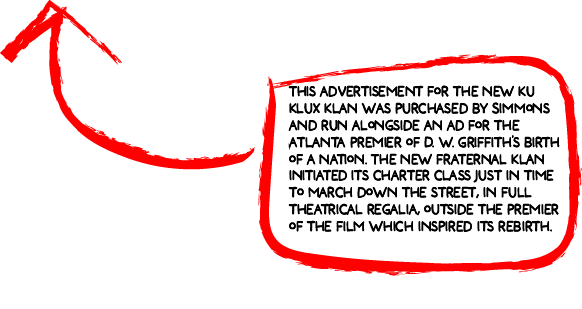
 The Ku Klux Klan was "100% American" in its control of power brokers, its appeal to masculinity, and in its cause celebre of white female purity wielded as justification for masked violence across the nation. In reality, the Second Klan was similar to so many quests for power across American history: underneath the mass-produced costume and pageantry layed a multi-level marketing scam, sold to white men by a cadre of commission-based salespeople.
"The Klan must be credited with a highly skillful combining of mystery and hocus-pocus, with very businesslike methods of selling memberships."
Robert L. Duffas, World's Work Vol. 46, no. 2, pp. 180
Despite widespread desire for a return to the days of policing through masked night rides, the first four years of the Knights of the Ku Klux Klan were unsuccessful at recruiting a wide membership base outside Georgia (where it was considered to be a costume-y joke). It wasn't until the son-in-law of (Mary) Elizabeth Tyler, a publicity agent for the Salvation Army, Anti-Saloon League, Y(M/W)CA, and The Red Cross joined the Klan that the Colonel's fraternal night riders reached an audience outside the Peach state.
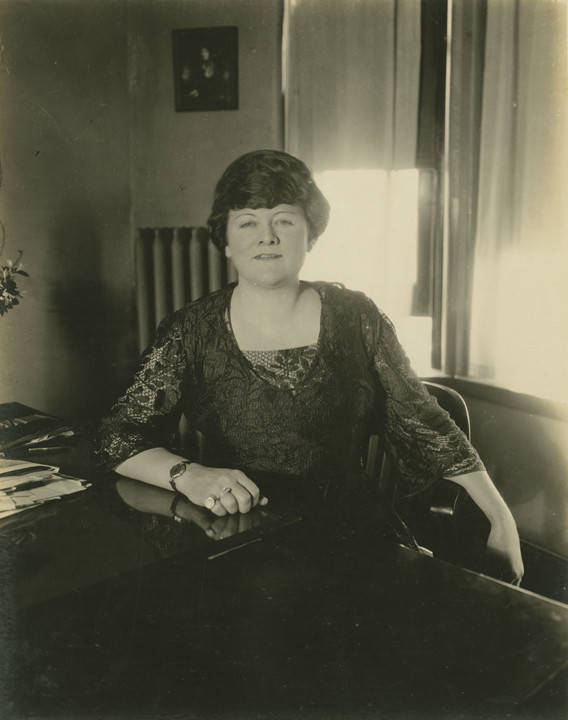 Elizabeth Tyler supplied both the brains and cash behind the Southern Publicity Association, a group she founded with traveling town booster Edward Young Clarke, while Clarke supplied the footwork. As both business partners and extra-marital lovers, Tyler and Clarke courted and signed a marketing agreement with William Simmons to take his fledgling Knights of the Ku Klux Klan to market in June 1920.
The first change was written into Simmons' contract with Southern Publicity Association. Each new recruit (alien) was to pay a $10 membership fee (Klecktoken) to join the KKK. Of each Klecktoken, $1.50 went to Simmons and the Ku Klux Klan Headquarters in Atlanta while $8.50 was retained by Clarke and Tyler to fuel and fund a robust pyramid of recruiters (Kleagles) across the Southern United States. After the expense of the whole of recruitment, Clarke and Tyler took home 20% of each and every Klan membership fee. Within months, both publicists were millionaires.
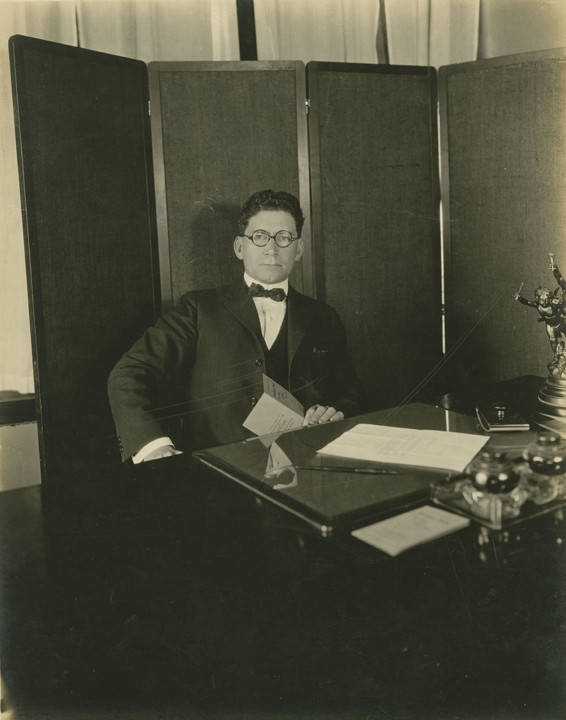 Clarke's background as a booster of struggling towns provided the framework for targeted recruitment. Kleagles arrived in a town following a series of (often religious) pro-Klan lecturers when the public was primed for manipulation. The Kleagles were given wide clearance as to which "100% American" grievances to emphasize. If a town had a high population of Black citizens and a complex racial relationship between the racial caste communities, antiBlack rhetoric would be employed. Conversely, in a town with neutral white-Black relations, immigration, anti-Catholicism, or anti-Semitism were emphasized by the Kleagle. Each town had a tailored programme of hate, inspired by broad distrust in modernity, urbanization, and the future of white male hegemony.
The Structure of Recruitment in the KKK
The territory of the Ku Klux Klan was carved into nine domains by Clarke & Tyler and each domain was controlled by a Grand Dragon. Underneath the Grand Dragon was a system of King Kleagles who were the lead recruitment organizers for a state or collection of states scantily populated by the Klan. Working for each King Kleagle were cadres of individual salespeople called Kleagles who organized and recruited local Klan membership. The Kleagles appealed to democracy and exclusivity by forming membership committees in each community in their organizational territory to "elect" new members before they were invited to join the Klan. In some areas, this form of recruitment resulted in a series of cards, received by the desired new member, through the mail. They were mysterious and intriguing, albeit a bit invasive and off-putting.

Upon arrival in a recruiting town, Kleagles initially targeted the wealthy and power-elite via the Masonic Lodge. From there, Kleagles were instructed to "get the mayor, the sheriff and his deputies if they are eligible, and the police department [as well as] the telephone and telegraph people, and the better class of railroaders." Eligibility to join the Klan changed over time; membership requirements were initially restricted to ideal and powerful members of a community but, as the drive for new membership accelerated, they became less stringent. A recruit was sometimes required to present fraternal (especially Masonic) credentials (which were closely inspected) prior to engagement by a Kleagle.
The morning after initiation, one recruit was singled out and pitched by the Kleagle to work as a Kleagle in their stead. One Kleagle cited "newspaper opposition" that made it difficult to "make any rapid progress, but [he] believed that on account of [the recruit's] more extensive acquaintance [the recruit] could render some valuable service to the cause." Once a Kleagle collected enough field organizers, he was promoted to King Kleagle and each of the organizers took the "Kleagle's Pledge of Loyalty" to "Emperor" William Joseph Simmons and, in true MLM fashion, signed an indemnity bond which secured William Joseph Simmons himself against liability claims by the new Kleagle. This "ceremony" transformed the fledgling organizer into a full-fledged Kleagle of the Ku Klux Klan.
Work as a Kleagle paid, at least initially, especially in areas where a Klan had yet to form. The commission structure was as follows: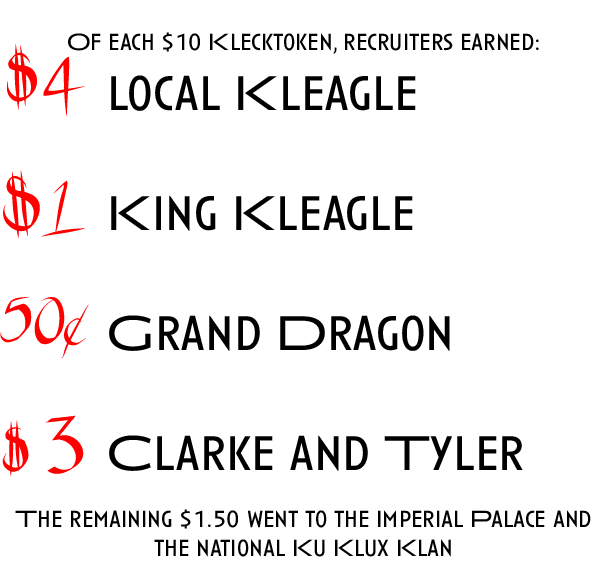

Beyond the initial Klecktoken, klansmen also paid a membership fee ranging from $0.0833 to $0.15 per month. The recruitment apparatus headed by Clarke and Tyler collected a percentage of these monthly dues as well as from the pay-to-advance Klan degree system. Each month, individual Klaverns were required to pay an "Imperial Tax" to Atlanta as well as a "Realm Tax" to their state Klan government.

Monetizing Membership
Elizabeth Tyler founded and owned the official Klan newspaper Searchlight, while Edward Young Clarke created a company to manufacture Klan costumes at a profit of $2.50 per officially sanctioned hooded bedsheet.
Owing in large part to the lucrative rewards of recruitment, by mid-1921, the Atlanta-based duo had 1,100 active Kleagles in their employ. In her 2017 manuscript, The Second Coming of the KKK, Linda Gordon calls Clarke and Tyler's recruitment and financial incentive structure "a decentralized system of franchises" and a "pyramid scheme." While the impact of the Ku Klux Klan was cruel, abusive, volatile, and violent, its success was driven by a multi-level marketing scam envisioned by Elizabeth Tyler and Edward Young Clarke. Together, the Southern Publicity Association and its band of Kleagles transformed Simmons' white nationalist Invisible Empire into a fee-based subscription service which entitled the license holder to perform antiBlack, anti-Semitic, anti-Catholic, and anti-Immigrant murder under the moral justification of 100% Americanism.
"It happened that Clarke and Tyler dealt in hate instead of sugar or automobiles, but they marketed hate as placidly as they might have marketed any other commodity."
Robert L. Duffas, World's Work Vol. 46, no. 1, pp. 36
 Explore Related Collections